
Allgemein
Vollnarkose beim Zahnarzt: Diese Risiken sollten Sie kennen
29. April 2021A visit to the dentist is rarely pleasant. Wouldn’t it be nice to simply lie down in the chair, drift off to sleep, and only wake up after the treatment? General anesthesia at the dentist makes this possible. But how exactly does treatment under general anesthesia work, and what risks need to be considered?
What is general anesthesia?
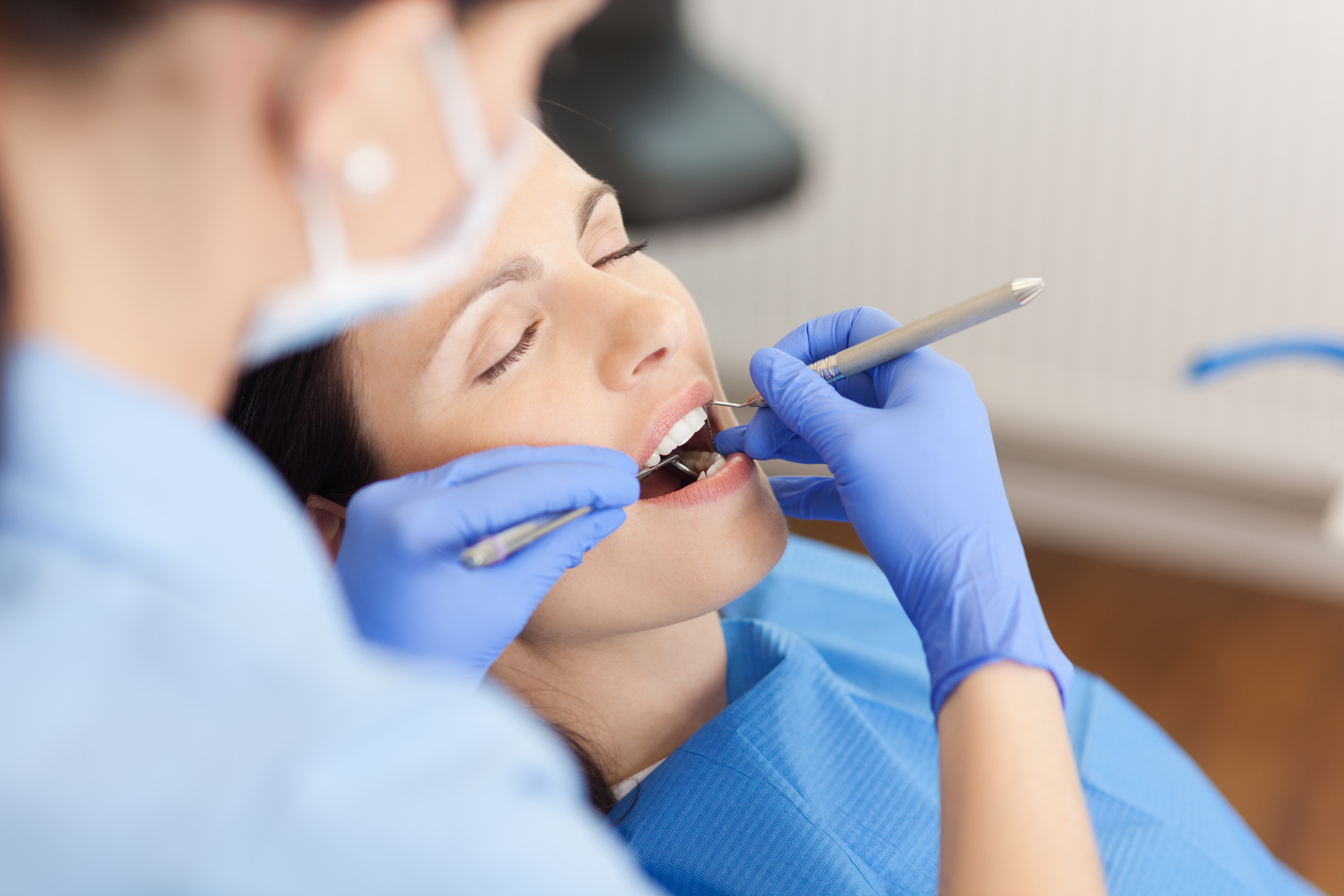
Dental treatment under general anesthesia
During general anesthesia, the patient is placed in a state of unconsciousness during the procedure . Pain perception and certain bodily functions are also controlled and shut down.
This ensures that you will not be aware of anything during treatment by the dentist and will experience neither fear nor pain.
General anesthesia offers the following advantages:
- They are not consciously aware of the treatment.
- No pain
- No memory of the treatment
- Muscle relaxation
- Suppression of autonomic nerve functions
General anesthesia not only ensures that you feel no pain, but also prevents you from remembering the operation itself. This makes visiting the dentist much easier for many patients with dental anxiety .
At the same time, autonomic functions are also suppressed, including blood pressure, pulse, bowel activity, and body temperature. By placing the body into an artificial sleep, not only is consciousness suppressed, but also independent breathing and many protective reflexes.

Get our FREE eBook about dental implants!
Therefore, general anesthesia always requires monitoring by an anesthesiologist. This naturally makes the treatment not only more time-consuming but also more expensive than local anesthesia.
When is general anesthesia advisable at the dentist?
General anesthesia is primarily considered when the treatment is very complex and time-consuming, or when the patient is afraid of the treatment.
Nearly two-thirds of all Germans are afraid of dental treatment. The mere thought of going to the dentist leads to sweating, a racing heart, and weak knees.
 Dental anxiety often stems from negative past experiences. People become inextricably linked to dental visits and pain. This can lead to stress and anxiety days before the actual appointment. Many people with dental anxiety therefore repeatedly postpone their treatments . But this creates a vicious cycle: the dental situation deteriorates further, and the fear of treatment intensifies.
In such cases, general anesthesia offers a solution: patients with dental anxiety can be put into a state of unconsciousness during treatment and thus no longer need to fear visiting the dentist. In this way, medically necessary dental treatments can be carried out despite dental anxiety.
If you want to learn more about dental anxiety, you’ll find what you’re looking for here .
Of course, treatment under general anesthesia can also be advisable in other situations. During particularly lengthy and complex procedures, even patients without dental anxiety may reach their limits and, as a precaution, opt for general anesthesia . General anesthesia may also be necessary if children are very uncooperative during treatment. The same applies to pre-existing medical conditions or allergies to local anesthetics .
What is the procedure under general anesthesia?
At the beginning of every general anesthetic, you will have a consultation with an anesthesiologist. He or she will explain the risks in general and in your specific case, and describe how the anesthesia will be administered. The anesthesiologist will also remain with you throughout the procedure and continuously monitor your anesthesia.

General anesthesia proceeds in three phases:
- The sleep onset phase
- The treatment phase
- The waking phase
During the initial sleep phase, the patient is given a sedative. Once this takes effect, the anesthesiologist administers the general anesthesia.
During the treatment phase , the patient must be artificially supplied with oxygen via a breathing mask or endotracheal tube. The anesthesiologist administers specific medications to ensure that deep sleep is maintained throughout the entire treatment. At the same time, they also monitor the patient’s circulatory function.
Once the treatment is complete, the recovery phase begins. The administration of medication is stopped, allowing the patient to wake up gradually. Afterwards, one sometimes feels somewhat unwell, which is why the recovery process is always supervised by medical staff, and the patient remains under observation in the doctor’s office or clinic for a short time before being discharged home accompanied by an adult.
What are the risks of general anesthesia?
Generally speaking, general anesthesia is a relatively safe procedure – otherwise, it wouldn’t be used. However, there are still certain risks and side effects that one should be aware of before undergoing general anesthesia.
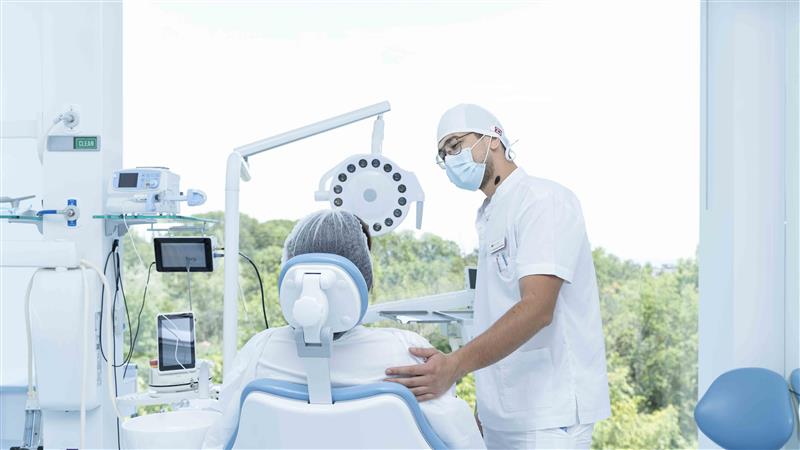
If you are in good health, there is generally no obstacle to general anesthesia . However, general anesthesia during deep sleep always represents a significant undertaking and places a considerable strain on the entire body. This strain can potentially lead to side effects or health consequences. Complications occur relatively frequently. The strain on the body is particularly extreme if, for example, you have several consecutive dental appointments and undergo general anesthesia each time.
Therefore, before any general anesthesia, the patient’s health and medical history must be thoroughly assessed. Pre-existing conditions or chronic illnesses, previous surgeries, intolerances or allergies to anesthetics are just some of the reasons why general anesthesia is not an option. General anesthesia is also not recommended during pregnancy . Similarly, advanced age and lifestyle habits such as alcohol or nicotine consumption can be risk factors for general anesthesia.
Ultimately, the risks and complications associated with general anesthesia must be individually assessed by the doctors in each case.
Another obstacle can be the financial aspect of general anesthesia:
How much does general anesthesia cost at the dentist?
 The cost of anesthesia depends primarily on the duration of the procedure. On average, one hour under general anesthesia costs approximately €300-350. This cost is comprised of:
- Preliminary investigations
- Duration of general anesthesia
- Fee for anesthesiologist and team
- Medications used
You will generally have to pay for general anesthesia at the dentist yourself. Statutory health insurance companies only cover general anesthesia if it is absolutely medically necessary.
If you only want general anesthesia (for example, because you suffer from dental anxiety), but the procedure is not medically necessary, the health insurance companies will not cover the costs.
Private health insurance or supplemental dental insurance may cover the costs of anesthesia, but this should be clarified well in advance of the treatment.
What alternatives are there?
General anesthesia is associated with several risks, extreme stress on the body, and high costs. Therefore, we do not perform general anesthesia at Dentaprime . In most cases, the support provided by our psychologically trained staff is sufficient to alleviate the fear of treatment for patients with dental anxiety. This often allows the procedures to be performed under local anesthesia. Furthermore, actively participating in the treatment is the best way to combat dental anxiety in the long term.

Dental treatment with nitrous oxide
Upon request, we also perform treatments using nitrous oxide or under twilight sedation.
Nitrous oxide is inhaled through a nasal mask, ensuring you feel relaxed and comfortable during the treatment. Because nitrous oxide is absorbed through the lungs, it takes effect very quickly, and the treatment can begin within minutes. The effects of sedation wear off rapidly, allowing you to leave the doctor’s office or clinic unaccompanied.
In cases of severe dental anxiety, local anesthesia and nitrous oxide may not be sufficient to alleviate your fears. In such cases, treatment with twilight sedation is also an option. This so-called analgesia and sedation involves a mixture of sedatives and painkillers. It ensures that you are in a twilight state during the treatment, in which you feel no pain. You will still be able to follow the dentist’s instructions , but you will not remember the procedure afterward.
As with general anesthesia , an anesthesiologist must be present during twilight sedation to monitor the procedure. However, it is significantly less taxing on the body than general anesthesia. Furthermore, it has the major advantage that the patient can cooperate during the treatment and follow instructions. This makes the dentist’s job considerably easier.
| Sedierungsmöglichkeiten im Überblick | |
|---|---|
| Lachgas | – Sorgt für Entspannung und ein Gefühl der Gleichgültigkeit – Patient kann im Anschluss die Praxis allein verlassen – Gut zu dosieren: für kleinere und größere Eingriffe geeignet |
| Dämmerschlaf | – Schmerz- und angstfreie Behandlung – Sorgt für Dämmerzustand, ohne Erinnerung an Behandlung – Patient bleibt ansprechbar und kann Kommandos umsetzen |
| Vollnarkose | – Künstliche Beatmung und Anästhesist notwendig – Hohe allgemeine Risiken und Belastung für den Körper – Patient kann nicht aktiv mitarbeiten |
Conclusion: Is general anesthesia recommended at the dentist?
General anesthesia at the dentist should only be a last resort. Based on our many years of experience treating patients with dental anxiety, we can confidently say that even in cases of severe dental phobia, sedation is sufficient to ensure a completely anxiety- and pain-free treatment. Furthermore, general anesthesia carries significantly more risks and puts more strain on the body compared to sedation .
We therefore recommend that dental treatments be performed under local anesthesia and, if necessary, nitrous oxide, and in exceptional cases, under twilight sedation. We guarantee that treatment at Dentaprime – regardless of the type of anesthesia used – will always be completely painless!
Do you have any further questions about treatment with Dentaprime or the different anesthesia options? Our service team is happy to assist you and provide a free consultation. Just give us a call !
